
We were on a train in Italy. I had a good view of this man sleeping.
We were on a train in Italy. I had a good view of this man sleeping.

I did this drawing after watching Dylan, the movie. He stands in history as an important song writer and musician. Bob Dylan was awarded the Noble Prize for Literature for “having created new poetic expressions within the great American song tradition”. The prize was awarded in 2016.
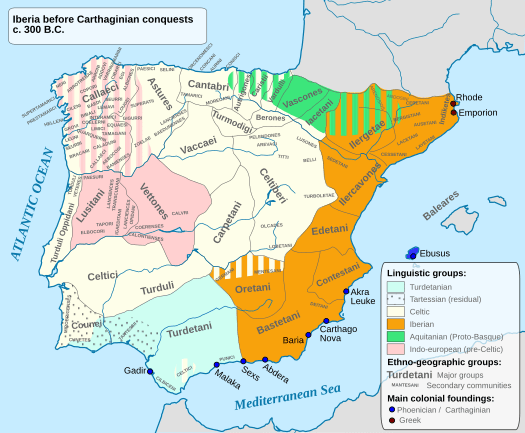
The name Valencia comes from the Romans, who named it Valentia Edetanorum, from the Latin Valentia, ‘valor’ and Edetanorum, the Edetanis being the Iberian people who populated the area. Roman soldiers arrived in 138 BCE, with Valencia’s founding credited to cónsul romano Décimo Junio Bruto.
The soldiers chose to build on what is commonly termed an island. A small branch of the Turia River circled a zone of slightly elevated terrain. You can still see the path today although the stream is underground. It moves approximately along Guillem de Castro, Xativa/Colon then to Porta del Mar (Port of the Sea).
The location is a high spot on the Turia River several kilometers inland, today the area surrounding the Real Basílica de Nuestra Señora de los Desamparados (The Royal Basilica of Our Lady of the Forsaken) generally referred to as the Almoina. Refer to the drawing below. There was a wooden bridge crossing the Turia, probably located where the current Torres de Serrano is located, called “Pont de Fusta,” as it is written in Valenciano, meaning “Wooden Bridge.” Straight across the rise is approximately where the current Estación de Norte is located. In the center you see the temple and the Forum, where the Real Basílica de Nuestra Señora de los Desamparados, Cathedral de Valencia and the La Almoina Archaeological Museum are now located. The forum, with government buildings, a temple, baths and the like, was destroyed during the civil war of 75 BCE. The forum was rebuilt as the city recovered.

The forum, with government buildings, a temple, baths and the like, was destroyed during the civil war of 75 BCE. The forum was rebuilt as the city recovered.
The hippodrome, a racetrack that used to be called a “circus”, dates to the 2nd century CE. Vestiges of both it and the forum can be seen today. La Almoina Archaeological Museum is several meters below the current level. The ruins displayed were discovered in the course of work to expand the Basilica in the early 1980’s when Valencia was competing with Barcelona in its worship of the Virgin de los Desamparados.
The remnants of the ninfeo (structures featuring water and plants), the thermal baths, the macellum (grain warehouse), the temple, the forum and many other important buildings of that time lie underground in the area surrounding the Basilica.

Remnants of the hippodrome are now visible in the basement of the Centro de Arte Hortensia Herrero (CAHH), about 5 meters below the current ground level.
During works on the Cathedral Museum workers came across remains of roman houses and streets one meter below ground. They are located beneath the San Francisco and San José chapels. Archaeologists dated the discoveries to the first and second centuries. “Some vital parts of the original structure are preserved, such as lintels, entrances and water vessels, according to the diocesan seminar Paraula, which informs about the unexpected discovery. “https://www.uv.es/uvweb/master-cultural-heritage-identification-analysis-management/en/master-s-degree-cultural-heritage-identification-analysis-management/roman-ruins-cathedral-valencia-1285932165134/GasetaRecerca.html?id=1285966840465
Valencia remained a Roman province until the 6th century, the later stages under Church rule. Then it became part of the Visigoths centered in Toledo.


Contact me for availability and prices for these drawings


Sleepy Don in his cabinet meeting. Ikea has better cabinets.
If no sound go to the Youtube version.
If no sound go to the Youtube version.
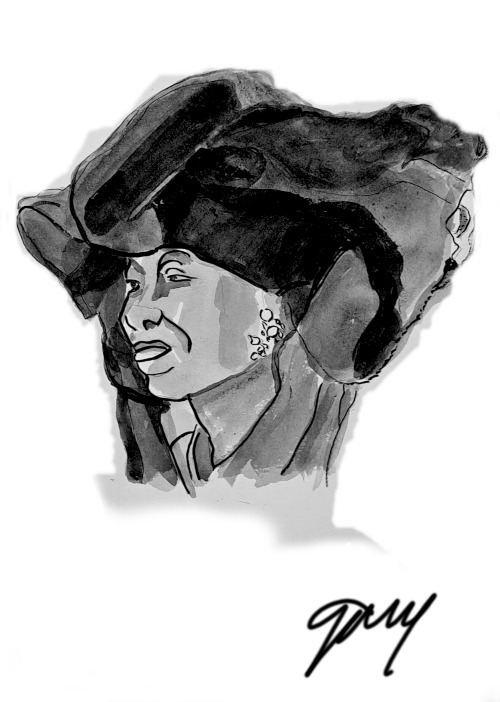
This is a portrait of Deva Cassel (Rome 2004) in her role as Angelica Sedara in the Leopard, a 2025 television series. She played the daughter of a small town mayor who used his daughter’s stunning beauty to climb the social ladder. This was an effort in which she willingly participated, developing a character increasingly frightening. Aside from her beauty, I did this portrait because of the connection we have with the Leopard.

Giuseppe Tomasi di Lampedusa wrote The Leopard, published posthumously in 1958 after rejections by several publishers. It is the story of his grandfather, Don Giulio Fabrizio Tomasi, Prince of Lampedusa, and the changes brought about by Sicily’s unification with Italy following Garibaldi’s 1860 invasion. In 1959 the novel won Italy’s highest award for fiction, the Strega Prize. In 2012 the Guardian named it as one of the top ten historical novels of all time. The 1963 movie, starring Burt Lancaster, premiered in 1963 to wide acclaim. I have read the book, seen the movie and the series.
We met Lampedusa’s nephew in Rome in 1999. At the time Gigi was writing a book. My wife was hired to help him write English, which was not native language, Italian. Anyone who’s tried to write professionally in a foreign language knows how difficult a task this is. Very few, such as the Ukrainian/Polish born Joseph Conrad, has been able to do so successfully.
For more context:
Most days Gigi and his wife took us to a roadside bar to have a granita, in this variation an shaved iced coffee topped with thick whipped cream. Locals like our hosts as well as truck drivers passing through loved to stop at this bar for a serving of their coffee granita. At night his wife often made pasta using the fresh herbs from their garden. One night she made pasta palermitana. You pan fry breaded fresh sardines – being just small fish of a number of varieties – and then stir them into the pasta. It was quite the treat. We have since lost touch with this couple.
Going by train from Rome to their house in Modica we crossed the Messina Strait. Aboard the ferry we walked to the bar, where we saw what turned out to be arancini. Neither of us knew what they were but now an arancini stand is always our first stop when in that part of Italy. For those who suffer having never had the pleasure, an arancino is a rice ball. There are many variations. One is stuffed with shredded beef and tomato sauce, coated with corn flour and then deep fried as they all are. The corn flour gives an orange glow, thus it the name ‘arancino (singular) and ‘arancini’ (plural),’ ‘arancia’ being the Italian for the fruit of the orange tree. On the way back to Rome we had a great view of the smoking Stromboli volcano. There is a piping hot calzone-like stuffed bread named after the volcano.

This traditionally styled watercolor is a painting of the Villa of Szyja Światłowski, in Lodz, Poland. It was moved to its current site in 2008 as a notable example of the “świdermajer” architecture, a local style of wooden architecture. It was originally built at 18 Scaleniowa St, Ruda Pabianicka as a summer resort. It was fully restored in its current location.
The house is attached to the Central Museum of Textiles, together with relocated period houses beginning with the homes of 19th-century craftsmen. There is also a church and a tram stop building.
The initials FK are on the rear door lattice, representing the first owners of the house, Fajwel and Frajda Kossowski. It was always owned by Jewish families. After the Kossowskis, it was occupied by the Werners (1912–1920), Rozenbergs (1920–1921), Ciuki’s (1921), Birenbaums and Szotland’s (1921–1922), and lastly the Światłowski’s (1922–1939). http://www.muzeumwlokiennictwa.pl/public/informacje/about-villa,366
The Central Museum of Textiles is on the same site. It was established in 1960 at The White Factory, a complex of classic buildings erected by the family of Ludwik Geyer in the years 1835 – 1886.[1] It is considered one of the most beautiful and unique monuments of industrial architecture in Poland.” There is a four-wing mill, the Boiler House, two dust and two water towers. https://visitlodz.com/lodz-city-culture-park/ On the top floor is a large collection of some mighty ugly Communist era clothing. Elsewhere there are numerous examples of mechanical looms and other textile machinery.
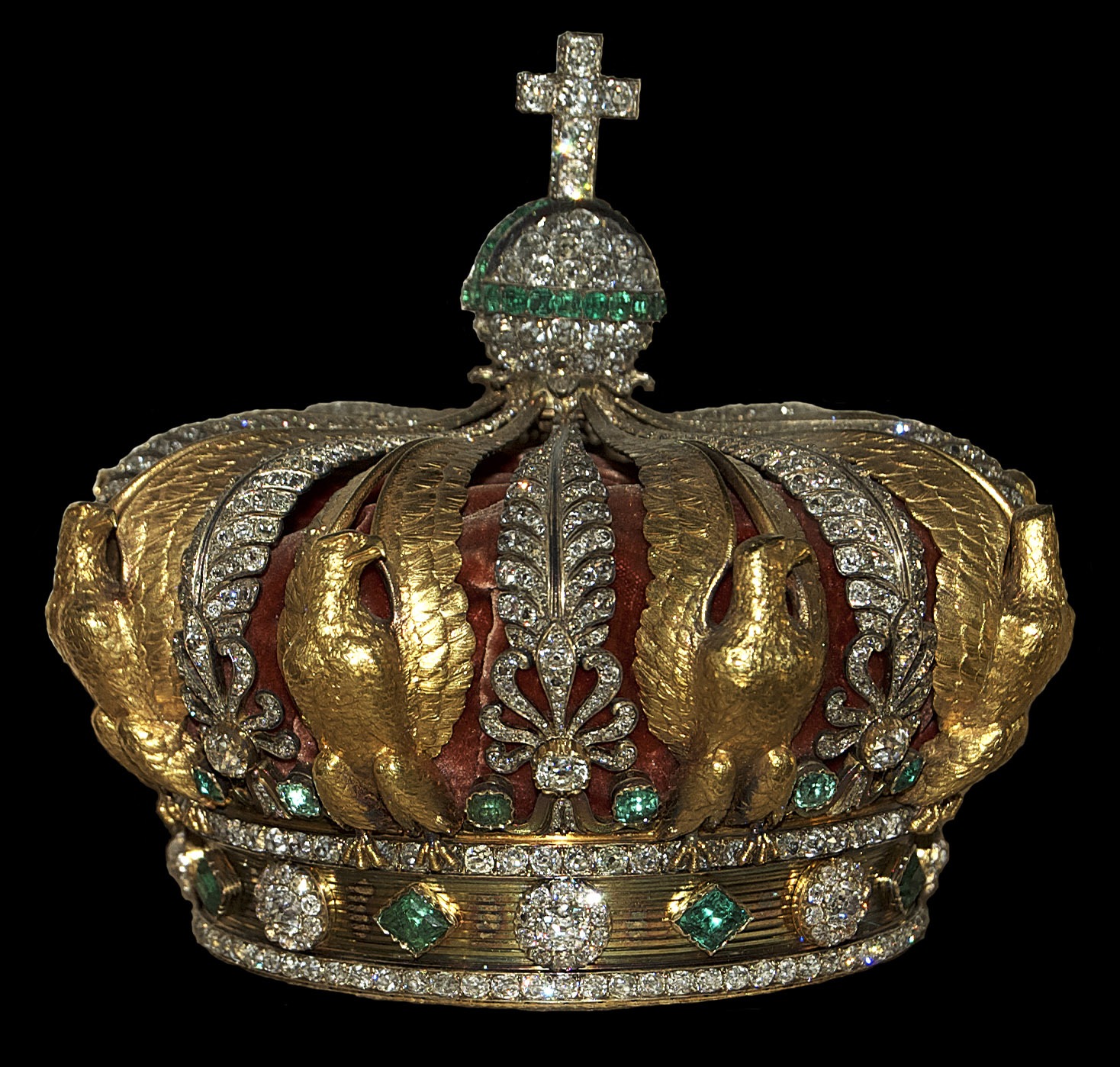
The most famous Kirkpatrick is in the news. Thieves tried to steal the crown of Eugenia, Napoleon III’s third and last wife. Interrupted by guards, they left the crown behind. The crown has eight gold eagles, 1,354 diamonds, 1,136 rose-cut diamonds and 56 emeralds https://www.nytimes.com/2025/10/19/world/europe/louvre-heist-items.html Photo from the NYT article.
In a stunning raid, thieves broke into the world’s most visited museum at 9:30 am. They escaped with eight extremely valuable items of jewellery. Using a lift to enter, they cut through a window. After threatening the guards, who closed down the area, they cut into the cases, leaving four minutes later. The gallery alarms were broken but per France’s culture ministry the museum’s other alarms sounded and security forces were notified. A crown of the empress Eugénie was also taken, but was recovered damaged near the museum after the thieves seemingly dropped it. https://www.bbc.com/news/articles/cg7nrlkg0zxo


